Marthiline: A Sweet Handwritten Font
There I was, staring at a blank brand board, trying to find the right visual voice for a small boutique skincare line. The client wanted something elegant but approachable, something that felt personal and authentic. That’s when I reached for Marthiline.
Aesthetic and Personality
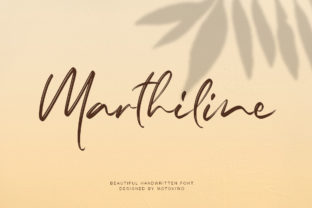
Marthiline is a sweet handwritten font that feels like a warm embrace. Its soft curves and flowing lines give it a romantic, whimsical vibe. It's not overly ornate, but it has enough character to stand out without being distracting. The font has a natural, imperfect feel that makes it feel more human than machine-made. It’s perfect for brands that want to convey a sense of care, creativity, or intimacy.
The typeface has a distinct personality—gentle, friendly, and a little nostalgic. It works well with minimalist designs where the font can be the focal point. But it also pairs nicely with other fonts when you need a bit of contrast.
Real-World Testing
I tested Marthiline in several real-world branding scenarios. On a logo concept, it added a touch of elegance without overpowering the design. When paired with a clean sans serif, it created a nice balance between modern and traditional. On a packaging mockup, it brought a handcrafted feel that made the product seem more personal and thoughtful.
On a business card, it looked great as a headline or a tagline. The font didn’t lose its charm at smaller sizes, which is a big plus. In social media graphics, it worked well as a header or a callout, adding a playful yet professional edge.
For a website header, Marthiline stood out as a strong display font. It was readable and visually engaging, making it ideal for hero sections or featured content. On a flyer, it gave the design a warm, inviting feel that encouraged people to read more.
Strengths and Limitations
Marthiline shines as a display or headline font. It’s not meant for long blocks of text, and that’s okay. Its beauty lies in its ability to add character and emotion to short phrases or key elements of a design. It’s particularly effective in branding projects that aim to feel more personal or artisanal.
However, it may not be the best choice for formal corporate work. In such cases, its casual nature might not align with the brand’s tone. Similarly, using it in small sizes or as body text could reduce readability, especially on digital screens.
It’s also important to consider the context. For example, if the brand is targeting a younger audience, Marthiline could be a great fit. But if the brand is more established or serious, a different font might be more appropriate.
Font Pairing and Design Applications
When pairing Marthiline with other fonts, it’s best to go for contrast. A clean serif or sans serif font can complement its organic feel. For example, pairing it with a classic serif like Georgia or a modern sans like Helvetica can create a balanced look that’s both stylish and functional.
As a script font, Marthiline is versatile. It can be used as a standalone element or as an accent to highlight key messages. It works well in editorial design, where it can add a unique flair to headlines or captions. In commercial design, it can be used for product labels, signage, or promotional materials to add a touch of personality.
For web design, Marthiline is available as a webfont, which makes it easy to integrate into websites. It’s ideal for headers, buttons, or any section where you want to draw attention without overwhelming the user.
Practical Tips for Using Marthiline
If you're considering using Marthiline in your next project, start by testing it in different contexts. Try it on a logo draft, a packaging mockup, or a social media graphic. See how it looks at various sizes and in different color schemes. This will help you understand its strengths and limitations.
Also, make sure to check the licensing terms before using it in client work. Commercial font licenses often have specific requirements, and it’s important to follow them to avoid any legal issues.
Marthiline is a great addition to any designer’s toolkit, especially for projects that require a personal, handmade feel. Whether you’re working on a boutique identity, a café refresh, or a skincare brand, this font can help you create something that feels authentic and meaningful.